
Salesforce CPQ Is Winding Down. Should You Move to Revenue Cloud Now? Posted by Greg Parashis
The short answer: CPQ’s end of sale is not an end of life. Existing customers stay fully supported and can renew, and Salesforce has not announced an end-of-life date. But all new product investment now goes to CPQ’s successor, Revenue Cloud (previously sold as Revenue Cloud Advanced and, from late 2025 into 2026, as Agentforce Revenue Management). If you run CPQ today, start migration planning now, even if the move itself is a year or two away.
In early 2025, Salesforce announced the end of sale for CPQ licenses. Existing customers still get support, but the roadmap is clear. All new investment is going into CPQ’s successor, Revenue Cloud. If you’re running CPQ today, the question isn’t really whether you’ll eventually move to Revenue Cloud. It’s whether you move on your own timeline or wait until CPQ’s limitations start costing you deals.
Salesforce CPQ end-of-sale timeline
Date What happened Early 2025 Salesforce announces end of sale for new Salesforce CPQ licenses 2025 Revenue Cloud Advanced launches as CPQ’s successor October 2025 (Dreamforce) Revenue Cloud Advanced is renamed Agentforce Revenue Management under the Agentforce 360 brand September 2026 (Dreamforce ’26) Salesforce returns to the Revenue Cloud name, dropping the Agentforce prefix Today CPQ is in maintenance: supported for existing customers, no new feature development, no announced end-of-life date
Revenue Cloud is a bigger product than CPQ ever was
Revenue Cloud isn’t a new version of CPQ with a fresh coat of paint. It extends into contract lifecycle management, order fulfillment, and revenue orchestration, covering the full revenue process in a single product. Because it’s built natively on the Salesforce platform, you’re no longer working within the constraints of a managed package. Revenue Cloud also exposes headless APIs, so it’s straightforward to call Revenue Cloud processes from external systems rather than being boxed into the Salesforce UI.
The CPQ pain points Revenue Cloud was built to fix
Anyone who has administered CPQ for a while will recognize these problems. Salesforce addressed each one directly in Revenue Cloud’s design.
Quote line scale. CPQ quotes could bog down or hit limits well before a deal got complicated. Revenue Cloud quotes support up to 1,000 lines, which removes the need to split large deals across multiple quotes or opportunities. A context service layer sits between the pricing engine and the underlying data objects, handling that volume while keeping the quoting interface responsive.
Product Selling Models. In CPQ, selling the same product both one-time and on a payment schedule usually meant creating duplicate product records. Revenue Cloud lets a single product support multiple selling models, giving sales reps flexibility without the administrative overhead of maintaining duplicates.
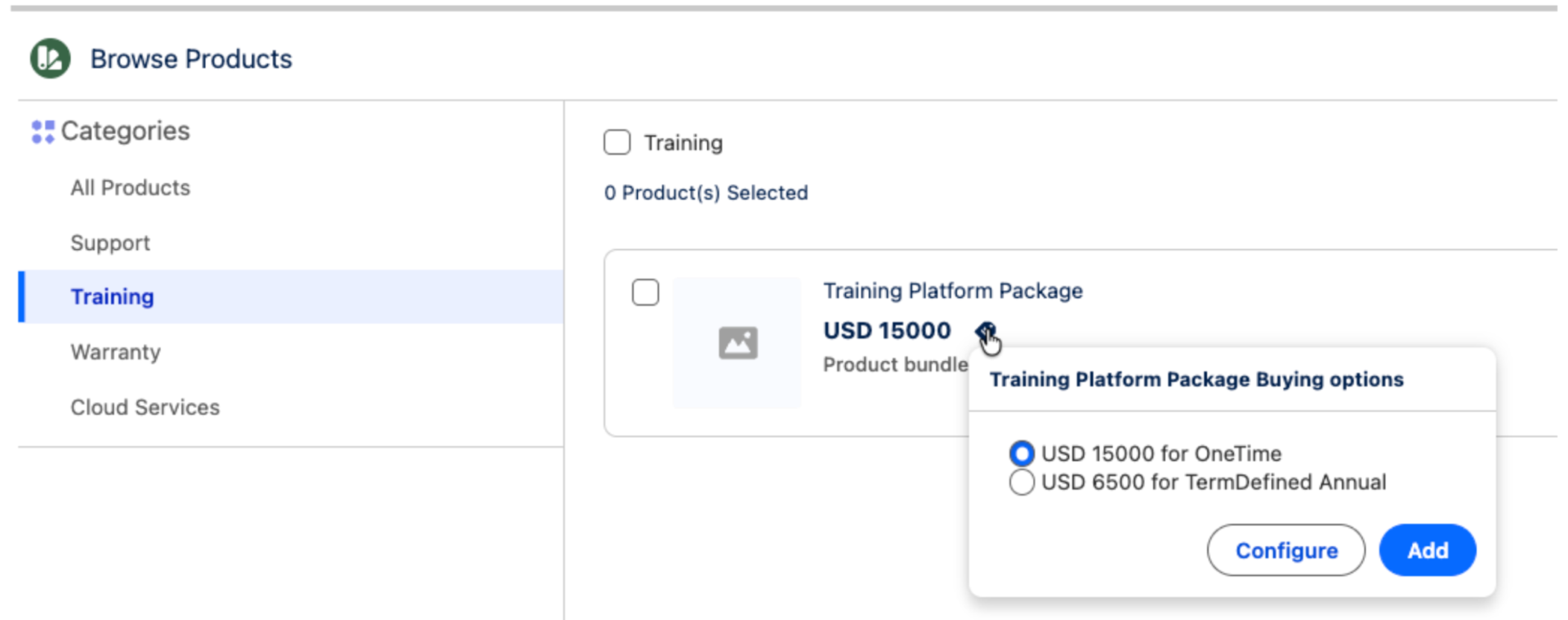
Buying options showing OneTime and TermDefined Annual pricing for the same product.
Custom Pricing Procedures. CPQ’s pricing waterfall was fixed and often difficult to troubleshoot when something priced incorrectly. Revenue Cloud ships a standard pricing procedure out of the box, but also lets you build your own using a flow-style interface. You can add, remove, or reorder pricing elements and simulate the logic against a sample record before it goes live.
Attribute Inheritance. Shared attributes are now managed in one place instead of being repeated across products. Adding or updating a product is faster, and there’s less ongoing administrative overhead to keep everything consistent. You can also see at a glance which attributes are inherited versus overridden at the product level.
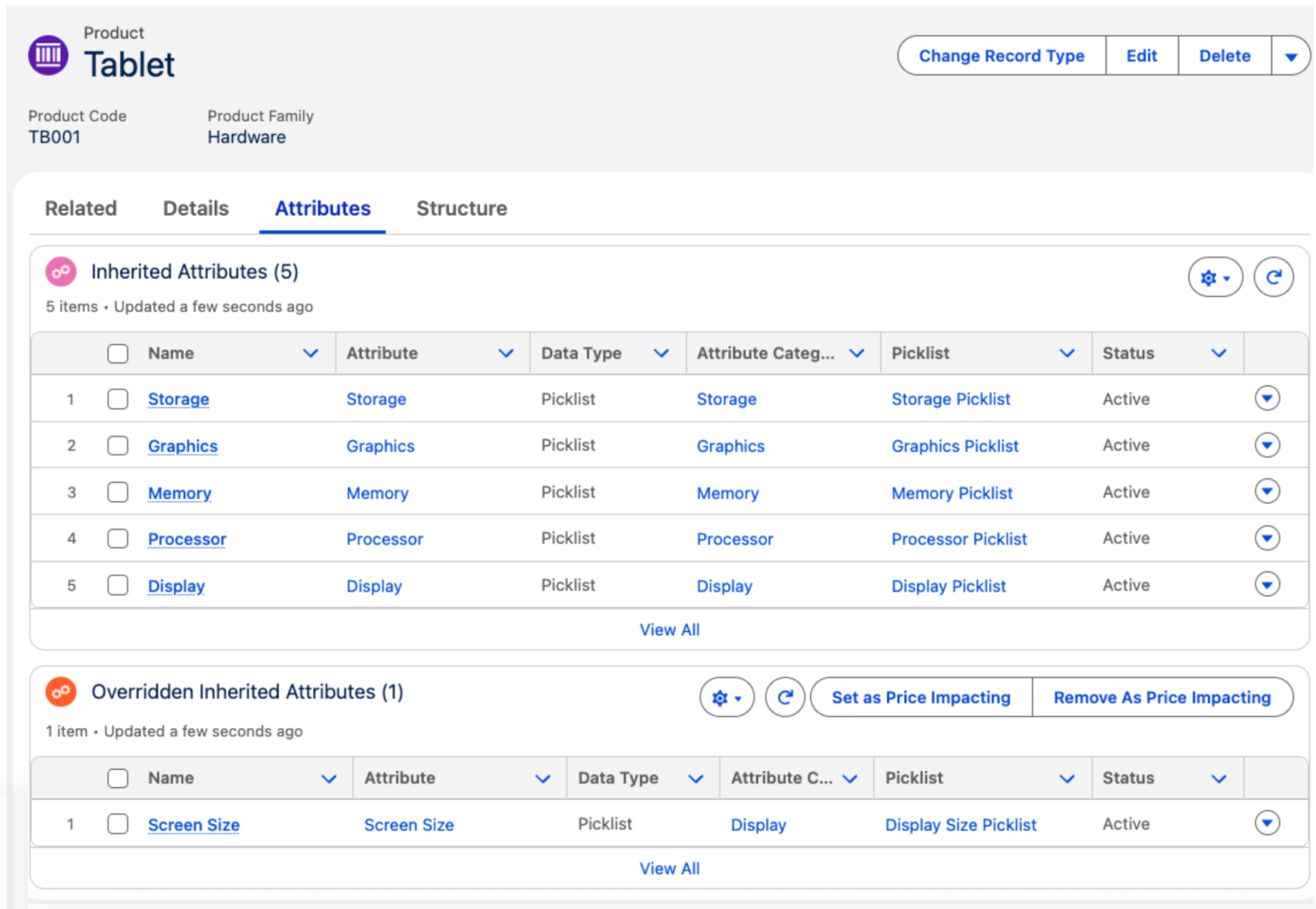
Product attributes page showing inherited attributes and an overridden inherited attribute.
What’s genuinely new for CPQ customers
Two capabilities in Revenue Cloud don’t have a real equivalent in CPQ, and they’re worth paying attention to on their own.
Contract Lifecycle Management (CLM). CLM connects directly to the quoting process and handles the creation, negotiation, and storage of legal documents. Sales teams can generate branded proposals and contracts with the correct legal language already in place based on what’s being sold. Built-in review and approval steps keep deals moving without the usual back-and-forth over redlines and versions.
Order Orchestration. This manages complex order processes from fulfillment through billing. A visual design canvas breaks a commercial order down into the technical fulfillment orders that downstream systems need to execute on. Real-time visibility into dependencies reduces order failures, and tasks like compensation, revenue recognition, and delivery kick off automatically as the order progresses.
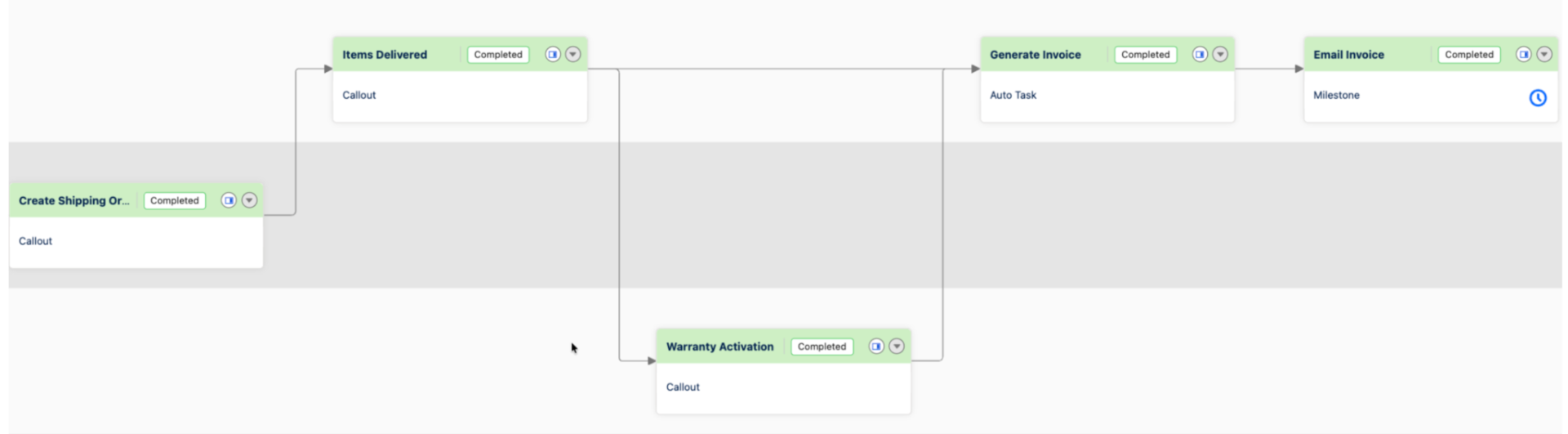
Order orchestration canvas showing a fulfillment flow from shipping through invoice email.
The case for moving sooner rather than later
CPQ is a maturing product that has seen little meaningful development over the past five or more years, and that isn’t going to change now that Salesforce has shifted its investment to Revenue Cloud. The gap between what CPQ can do and what modern revenue operations demand will only widen from here.
For businesses still running Salesforce CPQ, migrating to Revenue Cloud should be a near-term priority, not a someday project. Moving now puts you on a platform with active development behind it and a growing ecosystem built around it, rather than one that’s effectively in maintenance mode.
Frequently Asked Questions
Is Salesforce CPQ being discontinued?
Not exactly. Salesforce CPQ reached end of sale in early 2025, meaning new customers can no longer purchase it. Existing customers remain supported and can renew their contracts, and Salesforce has not announced an end-of-life date. New feature development has stopped, with investment shifting to Revenue Cloud.
What replaced Salesforce CPQ?
Revenue Cloud, previously sold as Revenue Cloud Advanced and briefly renamed Agentforce Revenue Management (ARM) from late 2025 until 2026. It covers product catalog, pricing, quoting, contract lifecycle management, order orchestration, and asset lifecycle management, going well beyond CPQ’s quoting focus.
Do I have to migrate from CPQ to Revenue Cloud?
No. There is no forced migration, and CPQ customers can continue renewing. But CPQ is no longer receiving new features, so the gap between CPQ and Revenue Cloud widens with every release.
Can CPQ and Revenue Cloud run side by side?
Yes. Salesforce supports coexistence of the two products, which lets organizations migrate in phases, moving one business unit or product line at a time rather than switching everything at once.
How long does a CPQ-to-Revenue Cloud migration take?
It is not a lift and shift. Revenue Cloud has a different, API-first architecture, so CPQ price rules, product rules, and approval customizations do not map across one to one. A structured assessment of your catalog, pricing logic, and integrations comes first. In our delivery experience, most CPQ-to-Revenue Cloud migrations run anywhere from six weeks to six months, with the longer end representing larger enterprise deployments.
If you’re weighing what a CPQ-to-Revenue Cloud migration would actually involve for your org, that’s a conversation worth having before the decision gets made for you by an unsupported feature or a deal you can’t configure. Our Revenue Cloud consulting services can help you plan that move on your own timeline.
CloudMasonry is a Salesforce Select Partner helping organizations design, optimize, and scale their Salesforce ecosystems across Sales Cloud, Service Cloud, Revenue Cloud, Data Cloud, and Agentforce.
Greg ParashisThe short answer: CPQ’s end of sale is not an end of life. Existing customers stay fully supported and can renew, and Salesforce has not announced an end-of-life date. But all new product investment now goes to CPQ’s successor, Revenue Cloud (previously sold as Revenue Cloud Advanced and, from late 2025 into 2026, as Agentforce Revenue Management). If you run CPQ today, start migration planning now, even if the move itself is a year or two away.
In early 2025, Salesforce announced the end of sale for CPQ licenses. Existing customers still get support, but the roadmap is clear. All new investment is going into CPQ’s successor, Revenue Cloud. If you’re running CPQ today, the question isn’t really whether you’ll eventually move to Revenue Cloud. It’s whether you move on your own timeline or wait until CPQ’s limitations start costing you deals.
Salesforce CPQ end-of-sale timeline
| Date | What happened |
|---|---|
| Early 2025 | Salesforce announces end of sale for new Salesforce CPQ licenses |
| 2025 | Revenue Cloud Advanced launches as CPQ’s successor |
| October 2025 (Dreamforce) | Revenue Cloud Advanced is renamed Agentforce Revenue Management under the Agentforce 360 brand |
| September 2026 (Dreamforce ’26) | Salesforce returns to the Revenue Cloud name, dropping the Agentforce prefix |
| Today | CPQ is in maintenance: supported for existing customers, no new feature development, no announced end-of-life date |
Revenue Cloud is a bigger product than CPQ ever was
Revenue Cloud isn’t a new version of CPQ with a fresh coat of paint. It extends into contract lifecycle management, order fulfillment, and revenue orchestration, covering the full revenue process in a single product. Because it’s built natively on the Salesforce platform, you’re no longer working within the constraints of a managed package. Revenue Cloud also exposes headless APIs, so it’s straightforward to call Revenue Cloud processes from external systems rather than being boxed into the Salesforce UI.
The CPQ pain points Revenue Cloud was built to fix
Anyone who has administered CPQ for a while will recognize these problems. Salesforce addressed each one directly in Revenue Cloud’s design.
Quote line scale. CPQ quotes could bog down or hit limits well before a deal got complicated. Revenue Cloud quotes support up to 1,000 lines, which removes the need to split large deals across multiple quotes or opportunities. A context service layer sits between the pricing engine and the underlying data objects, handling that volume while keeping the quoting interface responsive.
Product Selling Models. In CPQ, selling the same product both one-time and on a payment schedule usually meant creating duplicate product records. Revenue Cloud lets a single product support multiple selling models, giving sales reps flexibility without the administrative overhead of maintaining duplicates.
Buying options showing OneTime and TermDefined Annual pricing for the same product.
Custom Pricing Procedures. CPQ’s pricing waterfall was fixed and often difficult to troubleshoot when something priced incorrectly. Revenue Cloud ships a standard pricing procedure out of the box, but also lets you build your own using a flow-style interface. You can add, remove, or reorder pricing elements and simulate the logic against a sample record before it goes live.
Attribute Inheritance. Shared attributes are now managed in one place instead of being repeated across products. Adding or updating a product is faster, and there’s less ongoing administrative overhead to keep everything consistent. You can also see at a glance which attributes are inherited versus overridden at the product level.
Product attributes page showing inherited attributes and an overridden inherited attribute.
What’s genuinely new for CPQ customers
Two capabilities in Revenue Cloud don’t have a real equivalent in CPQ, and they’re worth paying attention to on their own.
Contract Lifecycle Management (CLM). CLM connects directly to the quoting process and handles the creation, negotiation, and storage of legal documents. Sales teams can generate branded proposals and contracts with the correct legal language already in place based on what’s being sold. Built-in review and approval steps keep deals moving without the usual back-and-forth over redlines and versions.
Order Orchestration. This manages complex order processes from fulfillment through billing. A visual design canvas breaks a commercial order down into the technical fulfillment orders that downstream systems need to execute on. Real-time visibility into dependencies reduces order failures, and tasks like compensation, revenue recognition, and delivery kick off automatically as the order progresses.
Order orchestration canvas showing a fulfillment flow from shipping through invoice email.
The case for moving sooner rather than later
CPQ is a maturing product that has seen little meaningful development over the past five or more years, and that isn’t going to change now that Salesforce has shifted its investment to Revenue Cloud. The gap between what CPQ can do and what modern revenue operations demand will only widen from here.
For businesses still running Salesforce CPQ, migrating to Revenue Cloud should be a near-term priority, not a someday project. Moving now puts you on a platform with active development behind it and a growing ecosystem built around it, rather than one that’s effectively in maintenance mode.
Frequently Asked Questions
Is Salesforce CPQ being discontinued?
Not exactly. Salesforce CPQ reached end of sale in early 2025, meaning new customers can no longer purchase it. Existing customers remain supported and can renew their contracts, and Salesforce has not announced an end-of-life date. New feature development has stopped, with investment shifting to Revenue Cloud.
What replaced Salesforce CPQ?
Revenue Cloud, previously sold as Revenue Cloud Advanced and briefly renamed Agentforce Revenue Management (ARM) from late 2025 until 2026. It covers product catalog, pricing, quoting, contract lifecycle management, order orchestration, and asset lifecycle management, going well beyond CPQ’s quoting focus.
Do I have to migrate from CPQ to Revenue Cloud?
No. There is no forced migration, and CPQ customers can continue renewing. But CPQ is no longer receiving new features, so the gap between CPQ and Revenue Cloud widens with every release.
Can CPQ and Revenue Cloud run side by side?
Yes. Salesforce supports coexistence of the two products, which lets organizations migrate in phases, moving one business unit or product line at a time rather than switching everything at once.
How long does a CPQ-to-Revenue Cloud migration take?
It is not a lift and shift. Revenue Cloud has a different, API-first architecture, so CPQ price rules, product rules, and approval customizations do not map across one to one. A structured assessment of your catalog, pricing logic, and integrations comes first. In our delivery experience, most CPQ-to-Revenue Cloud migrations run anywhere from six weeks to six months, with the longer end representing larger enterprise deployments.
If you’re weighing what a CPQ-to-Revenue Cloud migration would actually involve for your org, that’s a conversation worth having before the decision gets made for you by an unsupported feature or a deal you can’t configure. Our Revenue Cloud consulting services can help you plan that move on your own timeline.
CloudMasonry is a Salesforce Select Partner helping organizations design, optimize, and scale their Salesforce ecosystems across Sales Cloud, Service Cloud, Revenue Cloud, Data Cloud, and Agentforce.
Client Success Stories

Articulate
The e-learning software maker behind training courses used worldwide. Watch how CloudMasonry delivered Salesforce CPQ alongside Sales, Service, and Experience Cloud.
Brava Roof Tile
A premium composite roofing manufacturer. Read how a Salesforce CPQ transformation reduced waste, improved processes, and set their quoting up to scale.

Tri Pointe Homes
One of the nation’s largest homebuilders. See how Salesforce CPQ, Sales Cloud, and Experience Cloud support their premium homebuying experience.

Gradient AI
An AI company helping insurers cut quote turnaround times and predict underwriting risk. Read how CloudMasonry delivered Sales Cloud and Salesforce CPQ for their team.